
Custom Cabinet Drawers can make a kitchen easier to use by turning crowded cabinets into organized, accessible storage. Instead of stacking cookware in deep cupboards or searching through shelves for everyday utensils, homeowners can arrange their kitchen essentials in dedicated compartments that match their routines. The right drawer configuration can improve accessibility, reduce countertop clutter, and make better use of available cabinet space without requiring a larger kitchen.
However, functional drawer design involves more than choosing attractive fronts or adding extra storage. Drawer width, depth, weight capacity, hardware quality, and internal organization all influence how well a kitchen performs over time. Reza Custom Cabinet & Vanity helps homeowners consider these details when planning cabinetry that balances appearance and practicality. For homeowners comparing different upgrade options, understanding the difference between replacing cabinet components and San Diego cabinet refacing can also help determine which improvements make the most sense. This guide explores practical drawer ideas, useful configurations, and design decisions that can make everyday kitchen tasks more efficient.
Why Custom Cabinet Drawers Improve Everyday Kitchen Organization
Traditional cabinets often rely on fixed shelves that make items at the back difficult to reach. Drawers allow users to pull stored items forward, view their contents, and return everything without moving several objects first. This can be especially helpful in busy kitchens where cookware, food preparation tools, and utensils are used throughout the day.A well-planned drawer system also gives different categories of items a designated location. Instead of mixing measuring cups with cooking utensils or stacking food containers beside heavy pots, homeowners can create separate storage zones.
The most effective drawer layout starts with an inventory of what needs to be stored. Consider the items used daily, the equipment used occasionally, and the objects that require deeper or stronger storage. This approach helps prevent a common mistake: installing several drawers that look organized but do not accommodate the actual contents of the kitchen.
Choosing the Right Drawer Dimensions for Different Kitchen Items
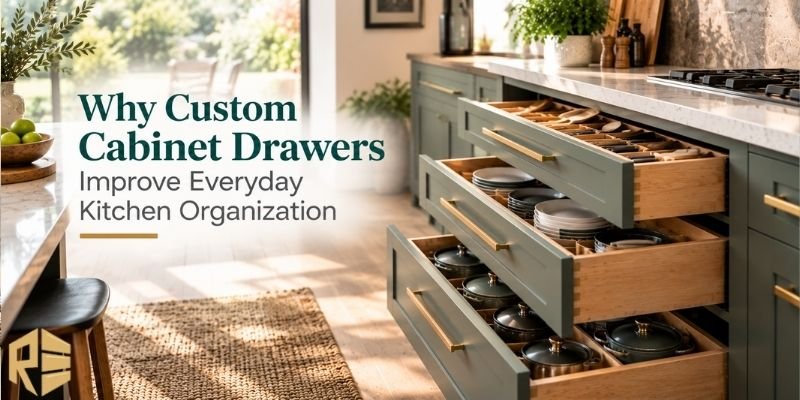
Drawer dimensions should be based on the size and weight of the items they will hold. A drawer that works well for cutlery may be unsuitable for large pans, while a deep drawer can waste space when used only for small utensils.
Shallow Drawers Keep Everyday Utensils Within Easy Reach
Shallow drawers are useful near the main food preparation area. They can hold cutlery, measuring spoons, peelers, kitchen scissors, and other small tools that need to remain accessible.Adjustable dividers help separate utensils by type and prevent clutter from building up. Homeowners can also use removable organizers to accommodate changing needs without redesigning the cabinet. For the best results, place these drawers close to the countertop where food preparation takes place. This reduces unnecessary movement and keeps frequently used tools within easy reach.
Medium-Depth Drawers Organize Plates, Containers, and Kitchen Supplies
Medium-depth drawers can accommodate bowls, plates, food storage containers, mixing tools, and many everyday kitchen accessories. Their versatility makes them useful in kitchens where storage needs vary from one cabinet to another.
Peg systems can help keep plates and bowls from shifting when drawers open and close. Adjustable dividers are useful for separating lids from containers, while nonslip liners can reduce movement and protect the drawer interior. Before selecting a drawer width, consider how much weight it will carry. A wide drawer filled with dishes may require stronger slides than a narrow drawer used for lightweight utensils.
Deep Drawers Provide Practical Storage for Pots and Heavy Cookware
Deep drawers are often a better alternative to lower cabinets with fixed shelves. They allow homeowners to store pots, pans, Dutch ovens, and larger cookware in a way that makes individual pieces easier to access.Place heavier cookware in lower drawers whenever possible. This reduces the need to lift heavy objects from above shoulder height and can make the kitchen safer to use.
Deep drawers should be designed around the cookware collection rather than installed at random. Measure the tallest pots, including their lids, and check that handles do not interfere with closing the drawer.
Smart Internal Drawer Features That Reduce Kitchen Clutter
The inside of a drawer determines much of its practical value. Even a large drawer can become difficult to use when different items shift together or smaller objects disappear beneath larger ones. Several internal features can improve organization without unnecessarily increasing the number of cabinets.
Adjustable dividers: Separate utensils, kitchen tools, and food preparation accessories while allowing the layout to change.
- Peg organizers: Keep plates, bowls, and other dishes in position.
- Knife inserts: Store knives in designated slots instead of allowing them to move loosely inside a drawer.
- Pot lid organizers: Keep lids upright and separate from cookware, making individual pieces easier to retrieve.
- Removable trays: Group small accessories and simplify cleaning.
- Expandable inserts: Adapt the drawer to different utensil sizes and storage requirements.
These features are most effective when assigned to specific tasks. For example, a drawer beside the stove may benefit from heat-safe utensil storage, while one near the sink may be better suited to dish towels and everyday cutlery.
Making Awkward Kitchen Spaces Useful With Specialized Drawers
Not every kitchen has a straightforward cabinet layout. Corners, narrow gaps, and spaces beside appliances can be difficult to use efficiently. Custom drawer configurations can help turn some of these areas into useful storage. Narrow pull-out units can hold spices, oils, and small bottles when there is insufficient room for a standard-width drawer. However, their dimensions should account for bottle height and the clearance required by nearby appliances.
Corner storage requires more careful planning. Depending on the layout, a corner drawer system may improve access, while a pull-out corner organizer may be more practical for bulky cookware. The best solution depends on the cabinet geometry, available clearance, and budget. Drawers beneath a cooktop can store pans and cooking tools, provided the design accounts for appliance specifications, heat clearances, and installation requirements. Similarly, drawers near the dishwasher can make it easier to unload cutlery and dishes directly into their designated storage areas.
Selecting Drawer Slides and Construction for Long-Term Performance
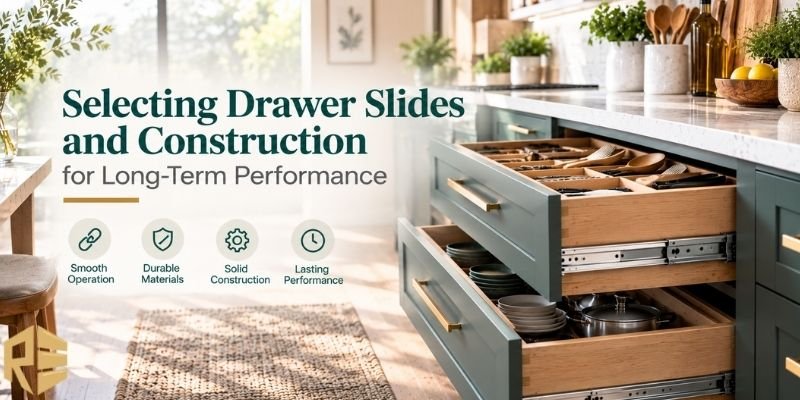
A drawer can be beautifully organized but still become frustrating if it sticks, sags, or fails to support its contents. Hardware and construction quality are therefore essential parts of the design. Full-extension slides allow a drawer to open far enough to access items near the back. This feature is particularly valuable in deep lower drawers where partial extension can leave stored cookware difficult to reach.
Soft-close mechanisms reduce slamming and can make the kitchen feel quieter. They are useful in frequently used kitchens, although the quality and load rating of the slide system remain more important than the feature alone.
When evaluating drawer construction, consider the following:
- Load capacity: Select slides rated for the combined weight of the drawer and its contents.
- Drawer box construction: Strong joints and suitable materials help the drawer withstand repeated use.
- Smooth operation: Test how easily the drawer opens and closes under a realistic load.
- Hardware compatibility: Make sure the slides match the drawer dimensions and cabinet design.
- Maintenance access: Choose a system that can be adjusted or serviced if components become loose.
For homeowners planning broader upgrades, coordinating drawer layouts with San Diego kitchen renovation cabinets can help ensure that the new storage arrangement supports the overall kitchen design rather than treating drawers as an isolated feature.
Custom Drawer Ideas for Different Kitchen Zones
A functional kitchen usually works best when storage follows the way people move through the room. Grouping related items around the areas where they are used can reduce unnecessary steps and keep work surfaces clearer.
| Kitchen Zone | Recommended Drawer Type | Items to Store | Main Benefit |
|---|---|---|---|
| Food Preparation Area | Shallow Organizer Drawers | Cutlery, Peelers, Measuring Tools | Keeps Everyday Tools Accessible |
| Cooking Area | Deep, Heavy-Duty Drawers | Pots, Pans, and Cookware | Improves Access to Heavy Items |
| Dishwashing Area | Medium-Depth Drawers | Plates, Bowls, and Dish Towels | Simplifies Unloading and Cleanup |
| Baking Area | Divided Medium-Depth Drawers | Measuring Cups, Baking Tools, and Accessories | Keeps Baking Supplies Organized |
| Narrow Cabinet Section | Slim Pull-Out Storage | Spices, Oils, and Small Bottles | Uses Limited Space Efficiently |
| Kitchen Island | Mixed-Width Drawer Configuration | Utensils, Serving Tools, and Food Preparation Supplies | Adds Convenient Storage Near the Work Surface |
The table provides general planning ideas rather than fixed specifications. Actual drawer dimensions should reflect the kitchen layout, cabinet construction, appliance locations, and items being stored.
Coordinating Drawer Designs With Cabinet Style and Kitchen Layout
Drawer fronts contribute to the overall appearance of the kitchen. Flat-front designs can create a clean, contemporary look, while framed or decorative fronts may suit traditional interiors. The choice should complement existing cabinet doors, countertop materials, and hardware. Consistency is important, but every drawer does not need to be the same size. A coordinated design can combine narrow utensil drawers, medium storage drawers, and deep cookware drawers while maintaining a consistent exterior finish.
Homeowners considering Custom cabinets in san marcos may also benefit from planning drawer storage alongside the wider cabinetry design. Coordinating finishes, handle placement, and cabinet proportions can help create a cohesive result across the kitchen. The kitchen layout matters just as much as appearance. Drawers should not collide with appliance doors, obstruct walkways, or prevent nearby cabinets from opening. In an island, check the clearance on both sides and consider whether drawers will remain accessible when several people are working in the kitchen.
Common Drawer Design Mistakes and How to Prevent Them
Several avoidable mistakes can reduce the usefulness of an otherwise attractive cabinet installation.
- Making every drawer the same depth: Different items require different storage dimensions. Plan a combination of shallow, medium, and deep drawers.
- Ignoring the weight of stored items: Heavy cookware requires suitable drawer construction and slides with an appropriate load rating.
- Adding organizers without measuring: Dividers and inserts should fit the usable interior dimensions, not just the external drawer width.
- Placing drawers too close to appliances: Check opening clearance before finalizing the layout.
- Overlooking plumbing or electrical restrictions: Cabinets near sinks, dishwashers, and appliances may require special planning.
- Prioritizing appearance over access: A decorative layout is less useful if commonly used items are difficult to reach.
Before installation, review the planned drawer contents and confirm that each drawer has a clear purpose. This simple step can prevent wasted space and reduce the need for additional organizers after the kitchen is complete.
Conclusion
A well-designed drawer system can make a kitchen more organized, accessible, and comfortable to use. The most successful layouts combine appropriate dimensions, practical internal organizers, durable construction, and hardware suited to the weight of everyday kitchen items. Start by identifying what you need to store and where those items are used. Then plan shallow drawers for utensils, medium-depth drawers for everyday supplies, and deeper storage for heavy cookware. Consider narrow pull-outs for difficult spaces, and make sure the finished design works with appliance clearances and the overall kitchen layout.
Reza Custom Cabinet & Vanity can help homeowners explore cabinetry options that reflect their storage needs and preferred style. With thoughtful planning, custom drawer solutions can improve daily kitchen routines while making better use of the available space.
Frequently Asked Questions About Custom Cabinet Drawers
- What Are Custom Cabinet Drawers?
Custom cabinet drawers are designed to suit specific cabinet dimensions, storage requirements, and kitchen layouts. They can include tailored widths, depths, internal dividers, specialized organizers, and hardware selected for the intended load.
- Are Deep Drawers Better Than Traditional Lower Cabinets?
Deep drawers often make pots, pans, and other heavy items easier to access because the contents can be pulled forward. Traditional cabinets may still be suitable for unusually tall objects or items that do not fit conveniently into drawers.
- Which Drawer Features Are Most Useful in a Kitchen?
Full-extension slides, soft-close mechanisms, adjustable dividers, pot lid organizers, and dedicated utensil inserts can improve usability. The best features depend on what the household stores and how frequently each drawer is used.