
Kitchen cabinets play an important role in both the appearance and functionality of a home. However, constant exposure to moisture, heat, cleaning products, and everyday use can gradually damage their surfaces and structure. Peeling finishes, swollen panels, warped doors, and visible cracks are common problems that homeowners may notice as their cabinets age. Understanding the causes of Kitchen Cabinets Damage is essential because different types of deterioration require different solutions. Some problems can be corrected with minor repairs, while others may indicate that certain cabinet components need replacement. For homeowners considering San Diego cabinet refacing, identifying the extent of the damage is particularly important before investing in a new finish or cabinet fronts. In this guide, we examine the most common reasons kitchen cabinets deteriorate, explain how to recognize early warning signs, and discuss practical ways to prevent further damage and extend the useful life of existing cabinetry.
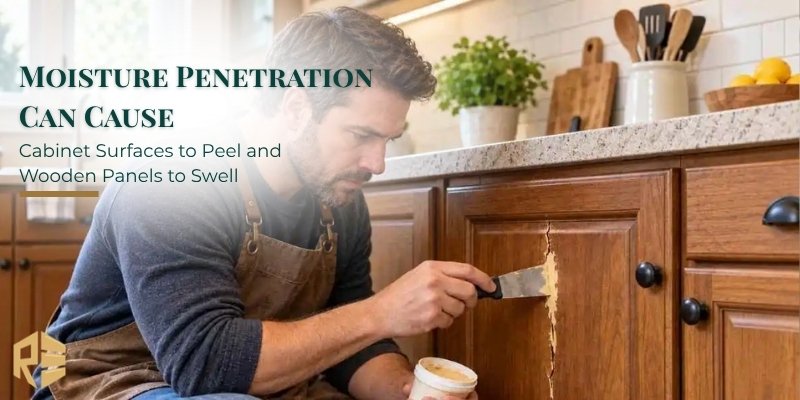
Moisture Penetration Can Cause Cabinet Surfaces to Peel and Wooden Panels to Swell
Water exposure is one of the most damaging factors affecting kitchen cabinets. Although cabinetry is designed for everyday kitchen conditions, prolonged contact with water can weaken its materials and protective finishes. Cabinets installed beneath sinks, beside dishwashers, or near plumbing connections are particularly vulnerable.
When moisture enters the cabinet material, it can cause several problems depending on its construction. Solid wood may absorb water and expand, while MDF and particleboard can swell and lose their original strength. Once these materials become saturated, they may not return to their original shape even after drying.
Common sources of moisture-related damage include:
- Leaking pipes beneath kitchen sinks.
- Water splashes around countertops and faucets.
- Dishwasher leaks or steam escaping during operation.
- Poorly sealed countertop edges.
- Wet cleaning cloths left against cabinet doors.
- Water accumulating around cabinet bases.
How to prevent moisture-related damage
Inspect the interior of sink cabinets regularly, especially around plumbing connections. Repair leaks immediately and dry wet surfaces instead of allowing water to remain on them. Proper sealing around sinks and countertops also reduces the likelihood of moisture entering exposed cabinet edges. If water damage has already caused significant swelling, replacing the affected panels may be more effective than applying a new decorative finish.
Excessive Kitchen Heat and Steam Can Weaken Cabinet Finishes and Adhesives
Kitchen cabinets are frequently exposed to heat from ovens, cooktops, microwaves, and other appliances. Repeated exposure to high temperatures can gradually affect paint, laminate, veneer, and thermofoil finishes.
Steam is another important factor. When hot moisture repeatedly reaches cabinet doors or upper panels, it can weaken the adhesive connecting decorative surfaces to their underlying material. This may result in bubbling, peeling, or separation along cabinet edges. The problem is particularly noticeable in cabinets positioned close to dishwashers and cooking equipment.
Several preventive measures can reduce heat-related deterioration:
- Turn on the range hood while cooking.
- Make sure kitchen ventilation systems operate properly.
- Follow the recommended clearance requirements for appliances.
- Avoid directing steam toward cabinet doors.
- Inspect cabinet surfaces near ovens and dishwashers regularly.
If a particular cabinet repeatedly develops peeling or discoloration, the appliance location and ventilation conditions should be evaluated before repairing the finish.
Low-Quality Cabinet Materials and Incorrect Finishing Methods Reduce Durability
The durability of kitchen cabinets depends heavily on the materials used during manufacturing. Cabinets may look similar when newly installed, but differences in material quality, construction, adhesives, and protective coatings can significantly affect their long-term performance. For example, inexpensive particleboard may deteriorate quickly when exposed to water. Poor-quality laminate can chip or separate, while improperly finished wooden surfaces may develop cracks or discoloration.
Manufacturing and installation mistakes can also contribute to premature deterioration. If the surface is not properly cleaned and prepared before painting, the coating may not adhere correctly. Similarly, insufficient adhesive application can cause veneer or laminate layers to separate.
When evaluating cabinet quality, homeowners should consider:
- The type of material used for cabinet boxes and doors.
- The thickness and durability of decorative surfaces.
- The quality of adhesives and edge sealing.
- The construction of joints and connections.
- The suitability of the finish for kitchen conditions.
Selecting materials based on the kitchen environment rather than appearance alone can help prevent many common cabinet problems.
Changes in Indoor Humidity Can Cause Wooden Cabinet Doors to Crack and Warp
Natural wood responds to changes in humidity by absorbing and releasing moisture. When the surrounding environment becomes humid, wood expands. When the air becomes drier, it releases moisture and contracts. This natural movement is usually manageable, but repeated or extreme fluctuations can gradually affect cabinet doors, frames, and joints.
One side of a wooden cabinet door may absorb more moisture than the other, creating uneven expansion. Over time, this difference can cause the door to bend or twist. Similarly, repeated expansion and contraction may produce small cracks around joints or panel edges.
Homeowners can reduce these risks by:
- Maintaining consistent indoor humidity levels.
- Improving ventilation in kitchens with limited airflow.
- Avoiding prolonged exposure to steam.
- Keeping cabinet surfaces properly sealed.
- Using suitable finishes for the selected wood material.
It is also important to allow cabinet materials to acclimate to indoor conditions before installation. This helps reduce unexpected movement after the cabinetry is fitted.
Poor Surface Preparation and Adhesive Failure Are Common Reasons for Cabinet Peeling
Peeling cabinet surfaces are not always caused by old age. In many cases, the problem begins during the manufacturing, painting, or installation process.
Different cabinet finishes can peel for different reasons. Painted wood may lose its coating because of grease contamination or inadequate sanding. Laminate and veneer surfaces may separate because of weak adhesive bonds. Thermofoil doors can also experience surface separation when exposed to excessive heat.
The most common reasons include:
- Insufficient cleaning before painting: Kitchen grease and dust prevent paint from bonding properly with the surface.
- Incorrect primer selection: Using an unsuitable primer can reduce adhesion and cause premature peeling.
- Poor adhesive application: Uneven or insufficient adhesive can lead to separation between decorative layers and cabinet panels.
- Moisture entering exposed edges: Water can weaken the bond between the surface finish and the underlying material.
- Excessive heat exposure: High temperatures may soften certain adhesives and contribute to surface separation.
The repair method depends on the affected material. Small areas of peeling paint may be repaired through sanding, priming, and refinishing. However, widespread laminate separation or swollen cabinet panels may require replacement.
Incorrect Installation and Excessive Weight Can Lead to Cabinet Cracks and Structural Problems
Cabinet damage does not always originate from environmental conditions. Installation mistakes and excessive mechanical stress can also affect cabinet structure. Wall cabinets must be securely attached to suitable structural supports. If mounting points are incorrectly positioned or fasteners are inadequate, the cabinet may gradually become unstable. Similarly, shelves carrying excessive weight can bend, crack, or pull away from their supports.
Cabinet doors may also develop alignment problems when hinges are improperly installed or mounting screws become loose.
Common installation-related problems include:
- Uneven cabinet mounting.
- Inadequate wall support for upper cabinets.
- Poorly secured cabinet joints.
- Excessive weight on shelves.
- Incorrect hinge positioning.
- Improper alignment between neighboring cabinet units.
Regularly checking hinges, mounting points, and shelf supports can help identify problems before they become more serious.
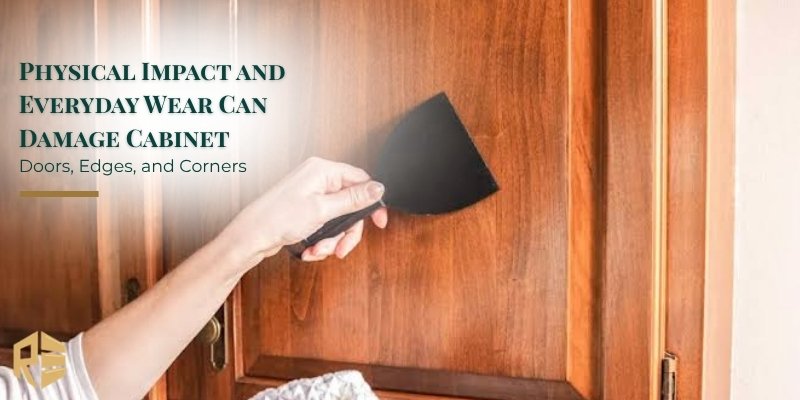
Physical Impact and Everyday Wear Can Damage Cabinet Doors, Edges, and Corners
Kitchen cabinets are used repeatedly throughout the day. Opening and closing doors, pulling drawers, moving cookware, and accidental impacts can gradually damage their surfaces. Cabinet corners and exposed edges are particularly vulnerable because they receive frequent contact. Heavy objects can also cause dents, chips, and cracks in weaker materials.
Children, pets, and busy household routines may increase the frequency of accidental impacts.
To minimize physical damage, homeowners should avoid slamming cabinet doors, use suitable door bumpers, and prevent heavy cookware from striking cabinet fronts. Soft-close hinges and drawer slides can also reduce repeated impact during everyday use. Small chips and scratches should be repaired before moisture enters the exposed material. This is especially important for MDF and particleboard surfaces.
Different Types of Kitchen Cabinet Damage Require Different Repair Solutions
Identifying the visible problem is only the first step. Homeowners should also determine whether the damage affects the decorative finish, individual cabinet components, or the structural integrity of the entire unit. The following table summarizes common cabinet problems and suitable approaches for addressing them.
| Type of Damage | Possible Cause | Recommended Solution |
|---|---|---|
| Peeling Paint | Poor preparation or moisture exposure | Sanding, priming, and refinishing |
| Bubbling Laminate | Heat or adhesive failure | Repair or replacement of affected surfaces |
| Swollen Cabinet Panels | Water penetration | Replacement of damaged components |
| Warped Cabinet Doors | Uneven moisture absorption | Door replacement or professional assessment |
| Small Surface Cracks | Aging finish or wood movement | Filling and refinishing |
| Loose Hinges | Repeated use or incorrect installation | Hardware adjustment or replacement |
| Broken Cabinet Joints | Structural stress or poor construction | Joint repair or component replacement |
| Damaged Cabinet Edges | Physical impact or water exposure | Edge repair or replacement |
A proper inspection should include cabinet interiors, exposed edges, hinges, mounting points, and areas around plumbing fixtures. A cabinet that looks acceptable from the outside may still have internal deterioration.
Choosing Between Cabinet Repair, Refinishing, Refacing, and Full Replacement
Not every damaged cabinet needs to be removed and replaced. The most suitable solution depends on the severity of deterioration, the condition of the cabinet boxes, and the homeowner’s renovation objectives.
Cabinet Repair for Minor Structural and Hardware Problems
Repair is appropriate when damage is limited to loose hinges, small cracks, scratches, or isolated joint problems. It can restore functionality without requiring major changes to the existing cabinetry.
Cabinet Refinishing for Worn or Discolored Surfaces
Refinishing focuses on restoring the appearance of existing cabinet materials. The process may include removing old coatings, preparing surfaces, and applying a new protective finish. It is most suitable when the cabinet structure remains in good condition.
Cabinet Refacing for Outdated Cabinet Doors and Finishes
Refacing involves replacing cabinet doors and drawer fronts while updating the visible surfaces of suitable existing cabinet boxes. It can provide a significant visual improvement without removing the entire cabinetry system.
For homeowners planning San Diego kitchen renovation cabinets, refacing may be worth considering when the existing cabinet boxes remain structurally sound but their appearance no longer matches the desired kitchen design.
Complete Cabinet Replacement for Extensive Deterioration
Replacement is generally more appropriate when cabinet boxes have severe water damage, extensive swelling, major structural cracks, or widespread deterioration. It is also a suitable option when homeowners want to change the kitchen layout or improve storage capacity.
Professional Cabinet Design and Material Selection Help Prevent Future Damage
Preventing cabinet deterioration begins with proper planning. Choosing appropriate materials, using reliable construction methods, and ensuring accurate installation can significantly improve the lifespan of kitchen cabinetry. A well-designed cabinet system should account for appliance placement, ventilation, moisture exposure, available space, and household storage requirements.
For homeowners considering Custom cabinets in San Marcos, selecting materials and finishes based on the kitchen environment is an important part of achieving a durable result. Custom designs can also accommodate unusual layouts, improve storage accessibility, and provide better-fitting cabinet components.
Reza Custom Cabinet & Vanity offers custom cabinetry, cabinet refacing, refinishing, and remodeling solutions. Evaluating the condition of existing cabinets before starting a project helps determine whether restoration or replacement is the more appropriate approach. Professional planning also helps address installation details such as cabinet alignment, door clearances, structural support, and proper sealing around vulnerable areas.
Conclusion
Kitchen cabinets can deteriorate for several reasons, including moisture penetration, excessive heat, humidity changes, poor material quality, incorrect installation, and everyday physical impact. Peeling finishes, warped doors, and cracked panels are important warning signs that should not be ignored. The best way to address Kitchen Cabinets Damage is to identify its underlying cause before choosing a repair method. Minor surface problems may only require refinishing, while damaged doors can sometimes be replaced through cabinet refacing. However, extensive structural deterioration may make complete replacement a more practical long-term investment.
By selecting suitable materials, maintaining proper ventilation, and addressing small problems early, homeowners can protect their cabinetry and avoid unnecessary renovation expenses. Reza Custom Cabinet & Vanity can help homeowners evaluate their cabinetry needs and explore custom cabinet, refacing, refinishing, and remodeling solutions that improve both kitchen appearance and functionality.
Frequently Asked Questions About Kitchen Cabinets Damage
- What causes kitchen cabinets to peel over time?
Peeling usually results from poor surface preparation, moisture exposure, excessive heat, or adhesive failure. The exact cause depends on whether the cabinet has a painted, laminate, veneer, or thermofoil finish.
- Can water-damaged kitchen cabinets be restored?
Minor water damage may be manageable if the material has not swollen or lost its structural strength. However, severely swollen MDF or particleboard components usually need replacement.
- Why do wooden kitchen cabinet doors become warped?
Wood naturally expands and contracts as humidity changes. Uneven moisture exposure, poor sealing, and improper storage conditions can increase this movement and cause cabinet doors to bend or twist.