
Replacing kitchen cabinets can be a major investment, but not every kitchen needs an entirely new cabinet system to look fresh and modern. If your existing cabinet boxes are still strong and functional, you may be able to Replace Kitchen Cabinet Doors without removing the entire structure. This approach can change the appearance of your kitchen while preserving components that are still in good condition. For homeowners exploring Kitchen cabinets San Diego options, replacing outdated doors can be a practical alternative to a complete renovation. However, the success of this project depends on several factors, including the condition of the cabinet frames, door measurements, hinge compatibility, and the desired design. Understanding how door replacement works, when it makes sense, and what additional updates may be necessary can help you make a more informed decision. This guide explains the process, its benefits, limitations, and the situations where a different cabinet solution may be more appropriate.
Replacing Cabinet Doors Can Transform the Appearance of an Existing Kitchen
Cabinet doors have a significant influence on the overall appearance of a kitchen. Their color, shape, material, finish, and hardware contribute to the room’s design. Even if the cabinet boxes are several years old, changing the doors can make the kitchen feel noticeably different.
For example, traditional raised-panel doors can be replaced with simple Shaker-style fronts for a cleaner appearance. Dark or dated finishes can give way to lighter painted surfaces, natural wood tones, or contemporary designs. Updated handles and hinges can further improve the finished look.
This option is particularly useful when the existing kitchen layout works well. If the cabinets provide enough storage, the countertops are in acceptable condition, and the appliances are positioned correctly, replacing the doors may deliver the visual update you want without changing the entire cabinetry system.
However, door replacement primarily changes the visible cabinet fronts. It does not automatically improve the interior storage, repair damaged cabinet boxes, or correct an inefficient kitchen layout.
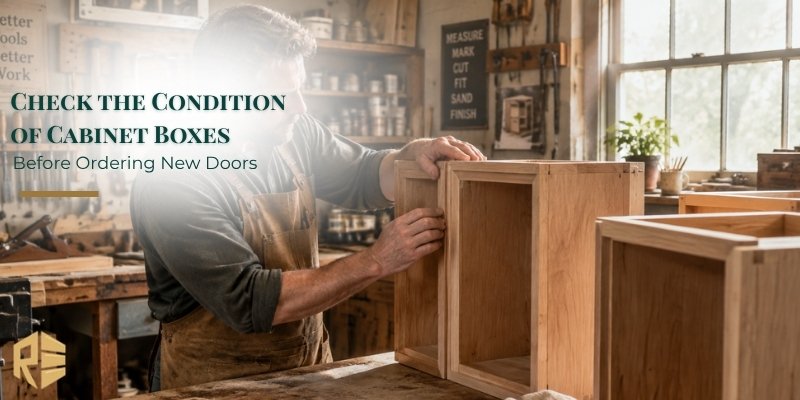
Check the Condition of Cabinet Boxes Before Ordering New Doors
The most important step is determining whether the existing cabinet structure is suitable for reuse. New doors cannot compensate for weak, damaged, or poorly installed cabinet boxes.
Inspect the following areas before moving forward:
- Cabinet sides and bottoms: Look for swelling, water stains, soft spots, cracks, or separation.
- Frames and joints: Check whether the cabinet structure feels solid and remains securely connected.
- Hinge mounting points: Make sure the existing screw holes and mounting surfaces can support the new hardware.
- Cabinet alignment: Look for boxes that are tilted, loose, or noticeably out of position.
- Interior surfaces: Check for moisture damage, mold, or deterioration, especially beneath sinks and around plumbing connections.
Pay particular attention to cabinets near dishwashers, sinks, and refrigerators with water connections. These locations may experience leaks or repeated moisture exposure.
If the cabinet boxes are stable, dry, and properly installed, replacing the doors is often worth considering. If several sections have significant structural damage, a more extensive renovation may provide better long-term results.
Understand the Difference Between Door Replacement and Cabinet Refacing
Although these terms are sometimes used interchangeably, replacing cabinet doors and cabinet refacing are not exactly the same project.
Door replacement focuses on removing the existing cabinet doors and installing new ones. Depending on the design, drawer fronts and hardware may also be updated.
Cabinet refacing generally involves a more comprehensive exterior update. In addition to new doors and drawer fronts, the visible surfaces of the existing cabinet boxes may be covered with matching veneer or another suitable finish. This creates a more consistent appearance across the entire cabinet system.
| Project Type | What Gets Updated | Best Suited For |
|---|---|---|
| Cabinet Door Replacement | Cabinet doors and sometimes hardware | Sound cabinet boxes with outdated doors |
| Cabinet Refacing | Doors, drawer fronts, and visible cabinet surfaces | Structurally sound cabinets needing a complete exterior update |
| Cabinet Refinishing | Existing cabinet surfaces and finishes | Cabinets with worn or discolored finishes |
| Partial Cabinet Replacement | Selected damaged cabinet sections | Kitchens with isolated structural problems |
| Full Cabinet Replacement | Entire cabinet system | Extensive damage or major layout changes |
The right option depends on how much of the existing cabinetry needs attention. If the cabinet frames have a different color or finish from the new doors, door replacement alone may leave an inconsistent appearance. Refacing can help create a more uniform result.
Choose New Cabinet Door Styles That Match Your Kitchen Design
Once the cabinet boxes have been evaluated, the next step is selecting a door style. The design should complement the kitchen’s architecture, countertops, flooring, backsplash, and appliances.
Some popular options include:
- Shaker Cabinet Doors
Shaker doors feature a simple frame-and-panel design. Their clean appearance makes them suitable for traditional, transitional, and modern kitchens.
- Flat-Panel Cabinet Doors
Flat-panel doors have smooth surfaces without raised or recessed decorative details. They work especially well in contemporary and minimalist interiors.
- Raised-Panel Cabinet Doors
These doors feature a raised center panel and more traditional detailing. They can add depth and character to classic kitchen designs.
- Slab Cabinet Doors
Slab doors have a single flat front and are often selected for streamlined kitchens. Their simple construction creates a clean and understated appearance.
When selecting a style, consider the existing cabinet proportions. A door that looks attractive in a showroom may not suit the dimensions or design of your kitchen. Comparing samples with your countertops and flooring can help you avoid mismatched finishes.
Measure Existing Cabinet Doors Accurately to Ensure a Proper Fit
Accurate measurements are essential when ordering replacement doors. Even small differences in width, height, or placement can affect how the doors open and how evenly they align with neighboring cabinets.
Before ordering, determine whether your cabinets use overlay, partial overlay, or inset doors. These configurations affect the required door dimensions and the way each front sits against the cabinet frame.
Important measurements include:
- Door width and height.
- Existing overlay dimensions.
- Distance between adjacent doors.
- Hinge cup diameter and location, when reusing compatible concealed hinges.
- Cabinet opening dimensions for inset doors.
- Drawer-front dimensions and spacing.
Do not assume that all doors in the same kitchen have identical measurements. Corner cabinets, narrow sections, appliance panels, and different cabinet configurations may require individual measurements.
It is also important to confirm whether new hinges are needed. A different door thickness or construction may require different hardware, even when the original hinges appear to be in good condition. Professional measurement can reduce the risk of ordering doors that do not fit correctly or create uneven gaps after installation.
Select Materials and Finishes That Can Handle Everyday Kitchen Use
Kitchen cabinet doors are exposed to grease, moisture, heat, cleaning products, and frequent handling. Their material and finish should be selected according to the kitchen environment and maintenance expectations.
Common options include:
- Solid wood: Offers natural grain patterns and can often be refinished, although it may expand or contract with changes in humidity.
- MDF: Provides a smooth surface for painted finishes and can support detailed door profiles when properly manufactured and protected.
- Wood veneer: Creates the appearance of natural wood using a thin wood layer over a stable substrate.
- Laminate: Offers a variety of colors and patterns with relatively straightforward surface maintenance.
No material is completely immune to damage. Proper edge treatment, suitable finishing, and careful installation all contribute to durability.
For busy households, choose a finish that is easy to clean and does not require complicated maintenance. Also consider how well the selected material matches the existing cabinet boxes if those surfaces will remain visible.
Update Hinges, Handles, and Other Hardware for a Complete Finish
Replacing cabinet doors is a good opportunity to evaluate the hardware. Old hinges may be worn, noisy, or difficult to adjust. Existing handles may also look outdated compared with the new door style.
Soft-close hinges can reduce the impact of closing doors and improve everyday convenience. Concealed hinges create a cleaner appearance, while decorative hinges may be appropriate for certain traditional cabinet designs.
Handles and knobs should be selected according to door size, design, and user comfort. Before drilling new holes, confirm their placement carefully. Incorrectly positioned hardware can affect the appearance of the doors and may be difficult to correct.
If you plan to reuse existing hinges, make sure they are compatible with the replacement doors. The hinge type, mounting position, door thickness, and overlay configuration all need to be considered.
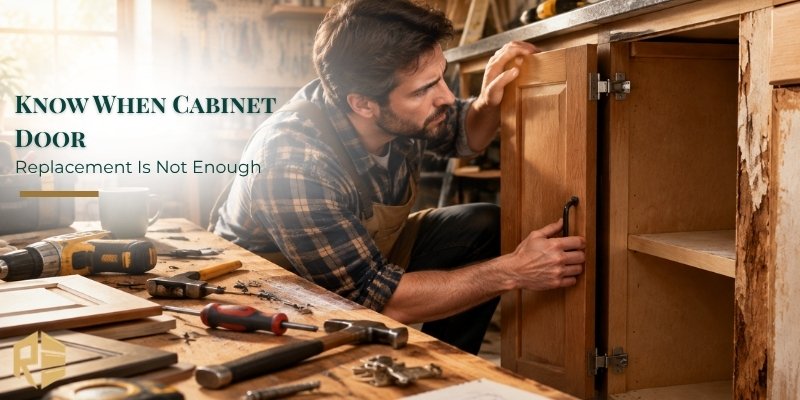
Know When Cabinet Door Replacement Is Not Enough
Replacing doors is not always the most suitable solution. Some kitchen problems involve the cabinet structure or layout rather than the appearance of the fronts.
For example, water-damaged particleboard may swell and lose its strength. Loose cabinet boxes may need structural repairs. Cabinets that are too shallow, too low, or poorly positioned may continue to create storage and workflow problems even after new doors are installed.
In these situations, Cabinet repair San Diego services may be worth exploring before deciding on a larger renovation. A professional assessment can help determine whether isolated damage can be repaired or whether replacing specific cabinet sections would be more appropriate.
Consider a broader cabinet project when:
- Several cabinet boxes are swollen or deteriorating.
- The existing layout does not support your cooking and storage needs.
- Cabinet frames are loose or significantly out of alignment.
- You want to change cabinet dimensions or add new storage areas.
- The existing construction cannot securely support replacement doors.
The objective should be to select a solution that addresses the underlying problem, not simply improves the appearance temporarily.
Consider the Cost and Scope Before Starting the Project
The cost of replacing cabinet doors depends on more than the price of the new fronts. The number of doors, selected materials, finish, hardware, measurements, and installation requirements can all affect the overall project.
A useful way to plan is to separate the main cost factors:
| Cost Factor | What Influences the Cost | What to Consider |
|---|---|---|
| Number of Doors | Total doors and drawer fronts | Count every individual front |
| Door Material | Wood, MDF, veneer, or laminate | Balance appearance and durability |
| Door Style | Flat, Shaker, or detailed profiles | Complex designs may require more work |
| Hardware | Hinges, handles, and soft-close mechanisms | Check compatibility with existing cabinets |
| Cabinet Preparation | Repairs or surface adjustments | Identify damage before installation |
| Installation | Removal, fitting, and adjustment | Accurate installation improves alignment |
| Additional Refacing | Veneer or finish updates | Needed when existing frames do not match |
To compare estimates fairly, make sure each quote includes the same scope of work. One estimate may cover only replacement doors, while another may include drawer fronts, new hinges, cabinet-frame finishing, and installation.
Avoid choosing an option based on the door price alone. A complete project estimate should account for the finished appearance and the condition of the existing cabinetry.
Work With a Custom Cabinet Team When the Existing Design Needs More Than New Doors
Some kitchens require more than a simple door update. You may want a different cabinet configuration, additional drawers, improved corner storage, or a finish that cannot be achieved by replacing the doors alone.
For homeowners considering Custom cabinets in carmel valley, a tailored design can address the actual dimensions and functional requirements of the kitchen. Instead of adapting the project to standard cabinet sizes, the design can be planned around the available space, storage needs, appliances, and preferred style.
Reza Custom Cabinet & Vanity provides cabinetry services that include custom kitchen cabinetry, refacing, refinishing, and remodeling solutions. Its existing cabinet remodeling approach distinguishes between updating visible components and making more extensive changes to the cabinet system.
Before starting, prepare photos of the existing kitchen, approximate measurements, and a list of the changes you want. This makes it easier to discuss whether new doors are sufficient or whether a more comprehensive cabinet update would produce a better result.
Conclusion
Replacing kitchen cabinet doors without replacing the entire cabinet system can be an effective way to refresh an outdated kitchen while keeping structurally sound cabinet boxes in place. The most important requirement is a careful assessment of the existing cabinetry. If the frames are stable, dry, properly installed, and compatible with the new doors, this approach may provide the visual improvement you want without a complete replacement project.
However, damaged cabinet boxes, poor alignment, and outdated layouts may require additional repairs, refacing, or new cabinetry. By choosing suitable door materials, measuring accurately, coordinating hardware, and comparing the full project scope, you can make a more informed decision. The best solution is not necessarily the one that replaces the fewest components; it is the one that delivers a durable, functional, and visually consistent kitchen.
Frequently Asked Questions
- Can I replace kitchen cabinet doors without replacing the frames?
Yes. If the existing cabinet frames and boxes are structurally sound, you can replace the doors while keeping the main cabinet structure. Accurate measurements and compatible hinges are essential for a proper fit.
- Is replacing cabinet doors cheaper than replacing all kitchen cabinets?
It can be less expensive because the existing cabinet boxes remain in place. However, the final cost depends on door materials, hardware, installation, and any repairs or finishing needed on the existing cabinets.
- Do I need to replace cabinet hinges when installing new doors?
Not always. Existing hinges can sometimes be reused if they are in good condition and compatible with the new doors. Different door thicknesses, overlays, or mounting requirements may make new hinges necessary.