
When planning a kitchen renovation or ordering new cabinetry, hardware selection deserves more attention than it often receives. Cabinet hinges determine how doors move, how securely they remain aligned, and how comfortable cabinets are to use over time. Two common options are soft-close and standard cabinet hinges. Although both connect cabinet doors to their frames, their operating mechanisms create noticeably different experiences. Soft-close hinges regulate the final movement of a door, while standard hinges rely on their basic mechanical design without built-in damping. For homeowners investing in Custom cabinets in San Diego, selecting the right hardware can help avoid unnecessary upgrades and improve the usability of the finished kitchen. However, the most expensive option is not automatically the right one. Door dimensions, cabinet construction, frequency of use, installation quality, and maintenance expectations should all influence the decision. Understanding these factors makes it easier to choose hinges that suit both your kitchen design and everyday requirements.
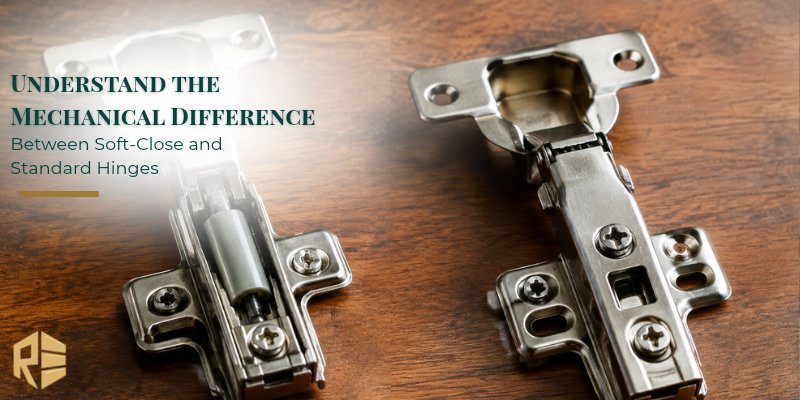
Understand the Mechanical Difference Between Soft-Close and Standard Hinges
The most important distinction between these hinge types is the way they control a cabinet door near its closed position.
A standard cabinet hinge provides a pivot point that allows the door to open and close. Depending on its design, it may include a spring that helps pull the door toward the closed position. However, a conventional hinge does not necessarily control the speed of the final movement. If someone releases the door too quickly, it may hit the cabinet frame.
A soft-close hinge adds a damping mechanism to this process. As the door approaches the frame, the damper creates resistance and gradually reduces its movement speed. This helps the door close smoothly instead of making sudden contact with the cabinet.
It is also important to distinguish between three terms:
- Standard hinge: Supports the door but does not necessarily control its closing speed.
- Self-closing hinge: Uses spring tension to pull the door toward its closed position.
- Soft-close hinge: Uses a damping mechanism to slow the door during closing.
These terms are sometimes used interchangeably in product descriptions, but they do not describe identical functions. Checking the actual hardware specifications is more reliable than choosing based on the product name alone.
Evaluate How Different Hinges Affect Everyday Kitchen Activities
The right hinge becomes particularly important when a kitchen has several users and cabinet doors are opened repeatedly throughout the day. Consider a household where people frequently access dishes, cookware, food containers, and cleaning supplies. Doors that close abruptly can create unnecessary noise and repeated impact against cabinet frames.
Soft-close hinges make these daily interactions more controlled. Someone can release a cabinet door without needing to guide it all the way to the frame. This feature is particularly useful in open-plan homes, where kitchen noise can easily reach nearby living and dining areas.
Standard hinges can still provide reliable performance in less demanding locations. A cabinet used occasionally for seasonal cookware or spare household supplies may not need an additional damping mechanism.
When deciding between the two, consider the actual use of each cabinet rather than applying one rule to every door. Frequently accessed storage generally benefits more from controlled closing than cabinets that remain closed most of the time.
Examine the Benefits of Soft-Close Hinges Beyond Noise Reduction
Reducing noise is the most recognizable advantage of soft-close hardware, but it is not the only reason homeowners choose it. One benefit is the reduction of sudden impact when a door reaches the cabinet frame. Repeated forceful closing can contribute to wear on contact points, mounting hardware, and surrounding cabinet components. A damping mechanism helps limit this impact by slowing the door before it reaches the frame.
Soft-close hinges can also make shared kitchens more comfortable. Children, guests, and other household members may not always close doors carefully. A controlled closing mechanism makes the experience more forgiving.
Another advantage is that soft-close functionality can be incorporated into many cabinet styles without changing their exterior appearance. Concealed hinges remain hidden when the doors are closed, so the hardware does not interfere with the visible design.
However, these benefits depend on selecting a suitable product. A low-quality hinge, incorrect mounting position, or poorly aligned door can still cause operational problems. Soft-close technology improves the closing action, but it cannot correct every cabinet installation issue.
Identify Where Standard Hinges Remain a Practical Choice
Standard hinges continue to have a place in residential cabinetry because not every storage area needs the same level of functionality. For example, a utility cabinet, secondary pantry, workshop storage unit, or occasional-use cabinet may operate perfectly well with a conventional hinge. In these locations, the additional cost of soft-close hardware may not provide enough practical value to justify the upgrade. Standard hinges can also be suitable when a homeowner is maintaining existing cabinetry and the current hardware remains structurally sound. Replacing functioning hinges solely to add a premium feature may be unnecessary, particularly when the project has other more important repair or renovation priorities.
Before selecting standard hardware, check its construction, load capacity, finish, and compatibility with the cabinet door. A simple hinge is not necessarily a low-quality hinge. Reliable performance still depends on choosing a product designed for the application.
Compare Both Hinge Types Before Making a Purchase
The following table highlights the practical differences that matter when selecting cabinet hardware.
| Comparison Factor | Soft-Close Cabinet Hinges | Standard Cabinet Hinges |
|---|---|---|
| Closing Mechanism | Includes a damping mechanism | No built-in damping system |
| Door Movement | Slows down before closing | No controlled closing speed |
| Noise Level | Reduces closing noise | May create impact noise |
| Initial Cost | Generally higher | Generally lower |
| Maintenance | Damper may require adjustment or replacement | Usually has a simpler mechanism |
| Installation | Requires compatible hardware and adjustment | Requires correct positioning and alignment |
| Recommended Application | Frequently used kitchen cabinets | Occasional-use storage cabinets |
| Main Advantage | Quiet and controlled closing | Lower initial cost and simpler design |
The table shows that the decision is not simply between a modern and an outdated product. Both types can be appropriate when matched to the correct cabinet application.
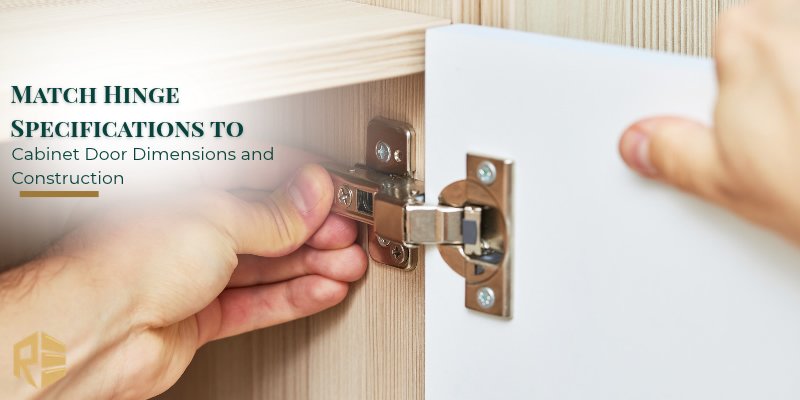
Match Hinge Specifications to Cabinet Door Dimensions and Construction
A hinge must support the physical characteristics of the door before its additional features become relevant. Door height, width, thickness, weight, and material all influence hardware selection.
A tall solid-wood door, for example, places different demands on its mounting system than a small lightweight door. If the hinge capacity is insufficient, the door may gradually sag, become difficult to close, or develop uneven gaps.
Several technical measurements should be checked before ordering hinges
- Door overlay: The amount by which the door covers the cabinet frame.
- Inset or overlay construction: Determines how the door sits in relation to the cabinet opening.
- Cup diameter and depth: Important for concealed European-style hinges.
- Opening angle: Determines how far the door can swing without hitting nearby surfaces.
- Mounting plate compatibility: Ensures the hinge connects correctly to the cabinet.
- Door thickness: Helps determine whether the selected hinge is suitable for the door’s construction.
The cabinet frame also matters. Face-frame and frameless cabinets may require different hinge configurations. Selecting hardware without identifying the cabinet type can result in incorrect positioning or limited adjustment.
Plan Hinge Placement Around Drawers, Appliances, and Kitchen Island Cabinets
Cabinet doors do not operate independently of the surrounding kitchen layout. Their movement must be considered alongside drawers, appliances, countertops, seating, and walking paths.
This is especially relevant when designing Kitchen Island Cabinets. An island may include storage doors on one side, drawers on another, and seating along the opposite edge. A door that opens into a nearby stool or blocks access to a drawer can make the entire arrangement less convenient.
Before finalizing the hinge selection, check:
- Whether an open door will interfere with an adjacent cabinet.
- Whether the door has enough clearance from the countertop overhang.
- Whether nearby drawers can open fully at the same time.
- Whether the selected opening angle suits the available space.
- Whether the door can be accessed comfortably without obstructing a walkway.
Soft-close functionality does not solve a poor layout. The hinge must be selected together with the cabinet dimensions and opening direction.
Decide Between Integrated Dampers and Separate Soft-Close Attachments
Soft-close functionality is available through different hardware arrangements. Understanding the distinction is useful when installing new cabinetry or upgrading an existing kitchen.
Integrated soft-close hinges contain the damping mechanism within the hinge assembly. The components are designed to work together, making this arrangement a straightforward option for many new cabinet installations. Separate dampers are additional devices installed on the cabinet or near the closing path of the door. Depending on the existing hinge system, they may allow a conventional hinge to gain a controlled closing function without replacing every component.
However, not all dampers are compatible with every cabinet door. Their effectiveness depends on door weight, installation position, closing movement, and product specifications. Some systems may also require adjustments to achieve consistent performance. For a new cabinet project, integrated hardware can simplify specification and installation. For an existing kitchen, a compatible add-on system may reduce replacement work. The best solution depends on the condition of the current hinges and the availability of matching components.
Calculate the Real Cost of Choosing Soft-Close Hardware
The purchase price of one hinge does not represent the full cost of a cabinet hardware upgrade. The total depends on the number of doors, hinges required per door, hardware quality, installation labor, and any modifications needed to the existing cabinets.
For example, replacing hardware throughout a large kitchen can involve considerably more work than upgrading a small vanity. If the new hinges use different mounting plates or cup dimensions, additional drilling or adjustment may be necessary.
When reviewing an estimate for Custom cabinetry for kitchens San Diego, ask for a clear breakdown of the hardware specifications. Important details include:
- Manufacturer and hinge model.
- Number of hinges required for each door.
- Whether soft-close functionality is integrated.
- Whether existing mounting plates can be reused.
- Installation and adjustment costs.
- Warranty coverage for the hinge and damping mechanism.
Comparing estimates using these details provides a more accurate picture of value than comparing the price of individual hinges alone.
Prevent Common Hinge Problems Through Correct Installation and Adjustment
Many cabinet door problems are mistakenly attributed to poor hinge quality when the actual cause is incorrect installation or alignment.
Uneven gaps between doors, doors that rub against cabinet frames, and inconsistent closing behavior can indicate that the hardware needs adjustment. Loose mounting screws, unsuitable mounting plates, or incorrect hinge positioning can also affect performance.
To avoid these problems, make sure the installation process includes the following checks:
- Confirm that all hinges are compatible with the cabinet construction.
- Use the manufacturer’s recommended number of hinges for each door.
- Secure mounting plates to structurally sound cabinet material.
- Adjust the door position to create consistent gaps.
- Test the full opening and closing movement.
- Check that soft-close mechanisms engage smoothly without resistance or unusual noise.
If a soft-close door suddenly stops slowing down, inspect the hinge for loose connections, damage, or a faulty damper. Replacing the entire hinge system may not be necessary if the problem is limited to one component. For homeowners investing in High-end cabinets San Diego, accurate installation and appropriate hardware selection are essential parts of achieving a finished kitchen that performs as well as it looks.
Conclusion
Choosing between soft-close and standard cabinet hinges depends on more than the initial purchase price. Soft-close hinges offer quieter operation, controlled door movement, and greater convenience for frequently used kitchen cabinets. Standard hinges, however, remain a practical option for secondary storage areas and projects where a simpler hardware system meets the requirements. Before making a final decision, consider cabinet door weight, dimensions, hinge compatibility, installation quality, and long-term maintenance. Selecting the right hardware from the beginning can improve everyday functionality, prevent unnecessary adjustments, and help your cabinets maintain reliable performance over time.
Frequently Asked Questions
- What is the main difference between soft-close and standard cabinet hinges?
Soft-close hinges include a damping mechanism that slows the door as it approaches the cabinet frame. Standard hinges do not have this built-in feature, so the door may close more abruptly depending on its design and how it is operated.
- Are soft-close hinges suitable for every cabinet door?
Not automatically. The hinge must match the door’s weight, thickness, overlay, and cabinet construction. The opening angle and available clearance should also be considered before installation.
- Can I add soft-close functionality without replacing all my hinges?
In some cases, yes. Compatible add-on dampers can provide controlled closing with certain existing hinge systems. However, compatibility must be confirmed before purchasing the components.