
Large serving platters, oversized bowls, roasting dishes, and decorative trays can quickly become difficult to organize in a kitchen with standard cabinets. Their unusual dimensions make stacking inconvenient, while their weight and delicate surfaces increase the risk of scratches, chips, and accidental breakage. Without a dedicated storage arrangement, these items often occupy valuable space and remain difficult to access when preparing meals or hosting guests.
Effective Cabinet Storage Solutions should accommodate the size, shape, weight, and frequency of use of different serving dishes. Vertical dividers, deep drawers, adjustable shelves, and dedicated cabinet compartments can make oversized serveware easier to store without overcrowding the kitchen. Homeowners exploring Custom cabinets in San Diego can benefit from designing storage around their actual dish collection instead of relying entirely on standard cabinet configurations. A well-planned interior makes it easier to retrieve dishes, protect fragile pieces, and maintain an organized kitchen that supports both everyday cooking and entertaining.
Best Ways to Store Large Serving Platters in Kitchen Cabinets
Large platters require more space than ordinary dinner plates, particularly when they have handles, decorative edges, or irregular shapes. Placing them in standard plate stacks can make the entire arrangement difficult to manage. The most practical storage method depends on the platter dimensions, cabinet layout, and available interior space.
For frequently used serving dishes, storage should provide easy access without requiring homeowners to move several other items. Vertical compartments work well for many flat platters, while wider shelves can accommodate oversized bowls and serving pieces that cannot stand upright.
Before choosing an organizer, measure the largest platter in the collection. Consider its length, width, thickness, and the space needed to remove it comfortably. A cabinet may technically accommodate a dish but still be inconvenient if the opening is too narrow or surrounding items obstruct access.
Separating everyday serving pieces from holiday dishes also helps prevent overcrowding. Frequently used platters should occupy accessible locations, while occasional-use pieces can be stored in less prominent cabinets.
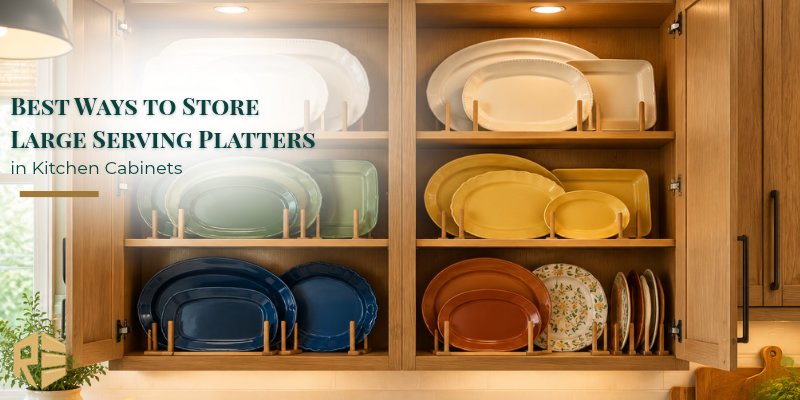
Vertical Cabinet Dividers for Platters, Trays, and Oversized Plates
Vertical dividers provide a convenient way to organize large serving dishes without creating unstable stacks. Instead of placing platters on top of one another, homeowners can store them upright in individual compartments, making it easier to select a specific piece.
This arrangement works particularly well for:
- Rectangular and oval serving platters
- Large decorative plates
- Baking sheets and roasting trays
- Cutting boards and serving boards
- Flat ceramic and stoneware dishes
Divider spacing should match the thickness and shape of the stored items. Compartments that are too tight make retrieval difficult, while excessive spacing can allow platters to lean and collide. Adjustable dividers provide greater flexibility when the collection includes different sizes or changes over time.
Vertical storage is most effective when installed in a cabinet with sufficient interior height and a wide enough opening. Placing frequently used platters in a lower cabinet near the kitchen island or dining area can make serving meals more convenient.
Deep Kitchen Drawers for Heavy Serving Bowls and Casserole Dishes
Deep drawers are especially useful for storing heavy serving bowls, casserole dishes, and oversized cookware. Unlike fixed shelves, drawers slide outward, allowing homeowners to see their contents and reach items at the back without bending into the cabinet.
A well-designed drawer system can separate serveware according to size and purpose. Medium serving bowls may fit in one drawer, while larger casserole dishes and heavier cookware can occupy a deeper drawer with appropriate support.
Drawer construction and hardware are important considerations. Heavy ceramic, stoneware, and glass dishes can place considerable weight on drawer boxes and slides. Selecting hardware with a suitable load rating helps maintain smooth operation and prevents premature wear.
Deep drawers should also have enough internal height to accommodate stacked dishes without forcing them against the drawer above. When planning Kitchen cabinets San Diego homeowners use for everyday cooking and entertaining, drawer placement should support easy access while maintaining comfortable movement throughout the kitchen.
Choosing the Right Cabinet Organizer for Large Dishes
Different serveware requires different storage configurations. A vertical organizer may be ideal for platters, but large bowls and covered dishes often need wider shelves or deeper drawers. Combining several storage systems can create a more functional cabinet interior.
| Storage Solution | Best For | Main Benefit |
|---|---|---|
| Vertical Dividers | Large platters, trays, and serving plates | Easy access and less stacking |
| Deep Drawers | Heavy serving bowls and casserole dishes | Convenient access and better weight support |
| Adjustable Shelves | Oversized dishes of different heights | Flexible storage space |
| Pull-Out Shelves | Large or hard-to-reach kitchen items | Improved visibility and accessibility |
| Dedicated Cabinet Sections | Special occasion serveware and large platters | Organized storage and reduced clutter |
| Protective Shelf Liners | Ceramic, glass, and delicate serving dishes | Reduced scratches, slipping, and chipping |
The most efficient arrangement often combines two or more options. For example, a cabinet can include vertical dividers for platters, adjustable shelves for serving bowls, and a drawer for utensils or smaller serving accessories. This configuration keeps different items organized without wasting space.
Cabinet Dimensions and Shelf Spacing for Oversized Serveware
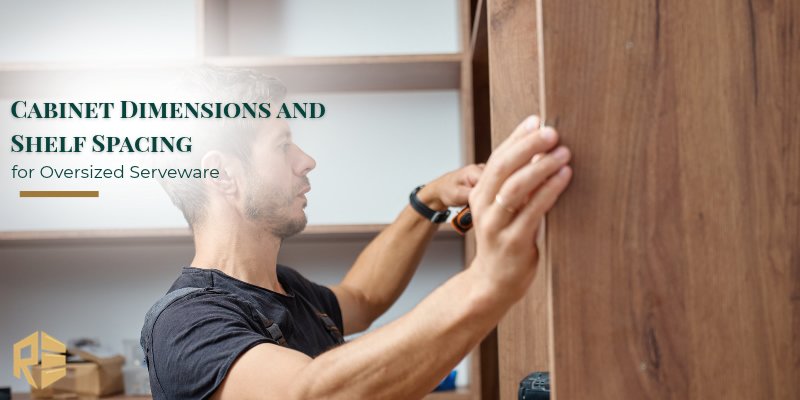
Standard cabinet dimensions do not always accommodate oversized serving dishes. A large platter may exceed the usable width of a compartment, while a tall serving bowl may require more clearance than a standard shelf provides.Before designing cabinet interiors, measure the largest items in your collection. Include handles, lids, decorative edges, and any features that increase their overall dimensions.
Important measurements include:
- Interior width: Allows platters to fit without touching cabinet sides.
- Cabinet depth: Provides adequate support for large dishes.
- Vertical clearance: Accommodates tall serving bowls and covered dishes.
- Shelf thickness and support: Helps prevent sagging under heavy dishware.
- Opening clearance: Ensures items can be removed without excessive tilting.
Shelf spacing should reflect the dishes that will actually be stored. Closely spaced shelves may create unnecessary restrictions, while excessively tall compartments can waste vertical capacity. Adjustable shelves are useful when serving pieces vary in size or the collection changes over time.
Planning these measurements before cabinet construction helps avoid storage problems that are difficult to correct after installation.
How to Protect Serving Platters from Scratches and Chips
Large serving dishes can become damaged when they slide across hard surfaces, collide with neighboring items, or are placed in unstable stacks. Proper cabinet organization should protect delicate pieces while keeping them easy to access.
- Several practical measures can reduce the risk of damage:
- Use non-slip shelf liners to prevent dishes from shifting.
- Place protective separators between delicate platters.
- Avoid stacking too many heavy pieces together.
- Keep fragile decorative dishes away from cookware.
- Store frequently used pieces where they can be reached easily.
- Use stable shelves and drawers designed to support the stored weight.
For valuable porcelain or decorative serveware, individual compartments or padded separators may be more appropriate than crowded shelves. Smooth cabinet interiors also make cleaning easier and help prevent dishes from catching on rough surfaces.
Where to Store Large Serving Dishes for Easy Kitchen Access
Cabinet location influences how convenient serveware storage will be during meal preparation. Large platters used frequently should be positioned close to the dining area, kitchen island, or countertop where food is arranged before serving.
In larger kitchens, a dedicated cabinet near the dining space can reduce unnecessary movement when hosting guests. In smaller kitchens, a lower cabinet with vertical dividers or pull-out shelves may provide better access without occupying additional floor space.
Homeowners considering High-end cabinets San Diego designs can incorporate dedicated serveware storage into the overall cabinetry layout. Matching finishes, concealed organizers, coordinated hardware, and customized interiors help maintain a cohesive appearance while improving functionality.
The cabinet location should also account for door swings, drawer extension, walkways, and nearby appliances. Storage should remain accessible without creating obstacles in the kitchen’s main traffic paths.
Common Kitchen Cabinet Storage Mistakes When Organizing Large Dishes
Even a spacious kitchen can become difficult to use when cabinet interiors are not planned around the stored items. Avoiding common mistakes helps protect dishes and makes storage more efficient.
- Stacking every platter together: Tall stacks make lower pieces difficult to retrieve and increase the risk of breakage.
- Choosing shelves that are too narrow: Oversized dishes may become wedged into compartments, making removal uncomfortable.
- Ignoring weight requirements: Heavy ceramic and stoneware pieces need appropriate shelf support and drawer hardware.
- Placing large dishes too high: Oversized platters are difficult to lift safely from elevated shelves.
- Failing to measure serveware: A cabinet may appear spacious but still be unsuitable for the largest dishes.
Overlooking accessibility: Storage that requires moving several other items before reaching a platter creates unnecessary inconvenience.
A functional cabinet design should allow homeowners to retrieve individual dishes comfortably while keeping the rest of the collection organized.
Planning Custom Cabinet Storage for Serveware Before a Kitchen Remodel
Planning storage before a kitchen remodel can prevent unnecessary cabinet modifications later. Start by creating an inventory of large serving dishes, bowls, trays, roasting pans, and specialty cookware. Measure the largest pieces and identify which items are used regularly and which are reserved for special occasions.
During cabinet planning, consider the following steps:
- Measure the largest platters, serving bowls, and specialty dishes.
- Separate frequently used items from seasonal serveware.
- Decide which pieces need vertical storage, drawers, or adjustable shelves.
- Review cabinet dimensions, shelf spacing, weight capacity, and hardware.
- Coordinate storage with appliances, countertop space, the kitchen island, and walkways.
This preparation helps designers create cabinet interiors around actual storage requirements rather than assumptions. It also makes it easier to prioritize practical features without adding unnecessary organizers or sacrificing valuable space.
Conclusion
Large serving dishes and platters require more than extra shelf space. Their size, weight, shape, and frequency of use should all influence cabinet storage design. Vertical dividers, deep drawers, adjustable shelving, and dedicated serveware compartments can help create a kitchen that is easier to organize, more convenient to use, and better equipped for everyday cooking and entertaining.
Well-planned Cabinet Storage Solutions allow homeowners to protect valuable dishes, reduce clutter, and make better use of available space. Whether designing a new kitchen or remodeling an existing one, organizing cabinets around actual storage needs can create lasting improvements in functionality.
Reza Custom Cabinet & Vanity can help homeowners plan cabinetry around their kitchen dimensions, storage requirements, and interior design preferences. With thoughtful planning, large platters, serving bowls, and specialty dishes can have a dedicated place without compromising the kitchen’s appearance or usability.
Frequently Asked Questions About Large Dish Cabinet Storage
- What is the best way to store large serving platters?
Vertical dividers are one of the most practical options because they allow platters to stand upright instead of being stacked. This makes individual dishes easier to retrieve and reduces unnecessary handling.
- Are deep drawers better than shelves for large serving dishes?
Deep drawers are generally more convenient for heavy bowls, casserole dishes, and oversized cookware because they slide outward and provide better visibility. Shelves can work well for lighter platters and less frequently used items.
- How much space should I leave between cabinet shelves?
Shelf spacing should be based on the height of the largest serving dishes and bowls. Measuring your collection before cabinet construction helps prevent shelves that are too short or unnecessarily oversized.