
Choosing the right cabinetry is one of the most important decisions when updating a kitchen, bathroom, or another part of your home. Cabinets affect how much storage you have, how efficiently you use the available space, and how the finished room looks. For this reason, homeowners often compare Custom Cabinets vs. Semi-Custom Cabinets before starting a remodeling project.
Although both options can provide attractive and functional results, they are not designed in exactly the same way. Semi-custom cabinets are based on an established manufacturing system and offer a selection of sizes, styles, finishes, and features. Custom cabinets are designed specifically for an individual space, giving homeowners greater control over dimensions, storage, materials, and appearance. The right choice depends on more than the initial price. Your room dimensions, layout, storage requirements, design preferences, project timeline, and long-term expectations should all be considered before ordering cabinetry.
What Are Custom Cabinets?
Custom cabinets are designed and built specifically for a particular home and project. Instead of selecting cabinets from a fixed range of dimensions, the design can be developed around the exact characteristics of the room.
This flexibility is especially useful when a kitchen or bathroom has unusual corners, narrow walls, uneven dimensions, architectural features, or difficult areas that standard cabinet sizes cannot efficiently accommodate. Custom cabinetry also provides greater control over the appearance and functionality of the finished space. Homeowners can select cabinet proportions, door styles, finishes, hardware, drawer configurations, and interior storage features according to their needs. For example, a custom cabinet can be designed to fit precisely beside an appliance, extend toward the ceiling, or create additional storage in an otherwise unused area. The biggest advantage is that the cabinetry is adapted to the room instead of requiring the room to accommodate a predetermined cabinet system.
What Are Semi-Custom Cabinets?
Semi-custom cabinets provide a balance between standard and fully customized cabinetry. They are manufactured using an established cabinet system, but homeowners typically have more choices than they would with stock cabinets. Depending on the manufacturer, customers may be able to select different door styles, finishes, hardware, cabinet sizes, and organizational accessories. Some manufacturers also offer limited modifications to dimensions or configurations.
Semi-custom cabinetry can work particularly well in kitchens and bathrooms with conventional layouts. When the available cabinet sizes and design options already meet the requirements of a space, there may be little reason to pay for complete customization. However, the level of flexibility varies between manufacturers. One semi-custom cabinet line may offer many modifications, while another may provide only a few choices. Reviewing the actual specifications is therefore important before making a final decision.
Custom Cabinets vs. Semi-Custom Cabinets: The Main Differences
The key difference in Custom Cabinets vs. Semi-Custom Cabinets is the degree of control available during the design and manufacturing process.
| Feature | Custom Cabinets | Semi-Custom Cabinets |
|---|---|---|
| Cabinet Dimensions | Designed for exact project measurements | Based mainly on available sizes |
| Design Flexibility | Extensive | Moderate to high |
| Storage | Fully personalized | Available options within the system |
| Materials and Finishes | Greater selection | Manufacturer selections |
| Unusual Layouts | Highly adaptable | May require compromises |
| Production | Made specifically for the project | Uses established manufacturing |
| Cost | Generally higher | Generally more affordable |
| Lead Time | Often longer | Usually shorter |
| Best Suited For | Unique and complex spaces | Conventional layouts |
Neither option is automatically better. The right solution depends on how closely the available semi-custom options match your room and how much personalization you actually need.
How Your Home Layout Affects the Decision
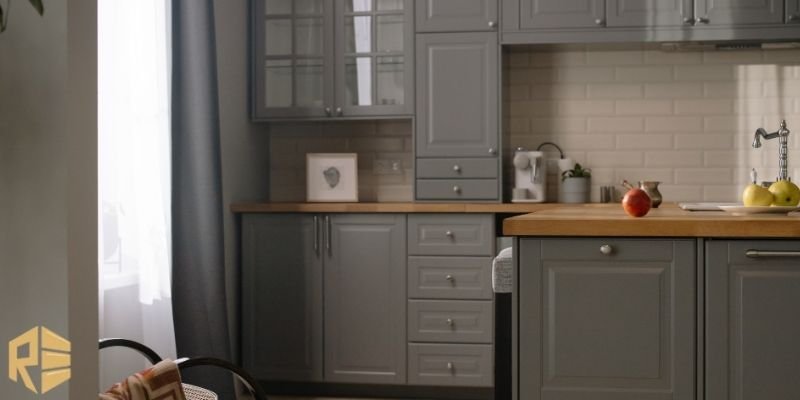
Your room’s layout should be one of the first factors considered when comparing custom and semi-custom cabinetry. Semi-custom cabinets can be an efficient choice when walls are relatively straight, dimensions are predictable, and appliances fit into a conventional arrangement. In these situations, standard cabinet sizes may provide an attractive result without leaving significant unused space.
More complicated rooms can present different challenges. Narrow sections, unusual corners, windows, columns, sloped ceilings, and architectural details can make it difficult to achieve a clean layout with predetermined cabinet dimensions. Custom cabinetry offers more freedom in these circumstances. Instead of leaving awkward gaps, the cabinet design can be planned around the specific characteristics of the room. This is particularly valuable when the goal is to use as much functional space as possible without making the room feel crowded.
Storage Should Be Part of the Design
A successful cabinet project should focus on how the space will actually be used. The number of cabinets alone does not determine how functional a kitchen or bathroom will be. Custom cabinets allow storage to be planned around specific household needs. Deep drawers can be designed for cookware, tall cabinets can provide pantry storage, and narrow areas can be converted into pull-out storage.
Semi-custom systems can also include useful organizers and accessories, but the available choices depend on the manufacturer. If your storage needs are relatively simple, semi-custom cabinetry may provide everything you need. If you have specific organizational requirements or want to maximize every available inch, custom cabinetry can provide more design freedom.
Comparing Price and Long-Term Value
Price is often the first factor homeowners consider, but it should not be the only one. Semi-custom cabinets are generally more affordable because they rely on established manufacturing processes and predefined components. They can therefore be a practical solution for homeowners working within a specific budget.
Custom cabinets usually require a greater investment because each project involves more individualized design and construction. However, the additional cost may provide benefits that are difficult to achieve with a predefined system. A custom design can reduce wasted space, improve organization, accommodate unusual dimensions, and provide specific features that support your lifestyle. When comparing estimates, look at the complete project cost. Materials, cabinet construction, finishes, hardware, delivery, installation, and accessories can all affect the final price.
When Semi-Custom Cabinets Are a Smart Choice
Semi-custom cabinetry can be the right solution when your home has a relatively straightforward layout and the manufacturer’s options meet your requirements.
This option may make sense when you:
- Have standard room dimensions
- Like the available styles and finishes
- Have straightforward storage needs
- Want more flexibility than stock cabinets
- Need to maintain a defined budget
- Prefer a potentially shorter production timeline
In these circumstances, full customization may not provide enough additional benefit to justify the extra cost.
When Custom Cabinets Are the Better Investment
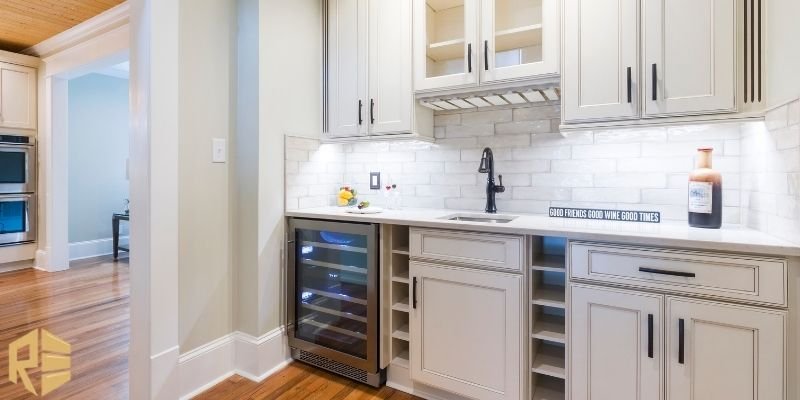
Custom cabinetry becomes more valuable when your project has requirements that standard systems cannot easily accommodate. Custom cabinets may be worth considering when you need unusual dimensions, specialized storage, unique finishes, or a design that must work closely with architectural features. They can also be beneficial in older homes where walls and room dimensions may not follow modern standardized measurements.
For example, homeowners researching Custom Cabinets in Rancho Santa Fe may have specific architectural and design expectations that require a more personalized approach. The same principle applies to any home where standard cabinet dimensions do not provide the desired result.
Quality Is About More Than Customization
A common misconception is that custom automatically means higher quality. In reality, the quality of cabinetry depends on several factors. Materials, construction methods, hardware, finishing, and installation all influence durability and performance. A well-built semi-custom cabinet can provide excellent results, while a poorly constructed custom cabinet may not deliver the expected value.
Before selecting a cabinet provider, ask about the materials used for the cabinet boxes and doors, drawer construction, hinges, slides, finishes, and installation process. Looking at the complete construction specification is more useful than choosing a product simply because it is labeled custom or semi-custom.
Consider Repair Before Replacing Existing Cabinets
Not every remodeling project requires completely new cabinetry. If your existing cabinets are structurally sound and the current layout works well, repairing or updating them may be a practical alternative. Homeowners looking for Cabinet Repair San Diego may discover that damaged doors, drawers, hardware, or finishes can sometimes be restored without replacing the entire cabinet system. However, repair may not solve problems caused by poor layout, insufficient storage, or outdated cabinet dimensions. In those situations, replacement may provide greater long-term value.
How to Decide Between Custom and Semi-Custom Cabinets
Start by evaluating your space and identifying the problems you want your new cabinetry to solve. Then consider how much design flexibility is actually necessary. If your room has standard dimensions and your needs are straightforward, semi-custom cabinetry may provide a strong combination of affordability and flexibility.
If your space is unusual, storage is a major concern, or you have a very specific design in mind, custom cabinetry may be the more suitable choice. Homeowners searching for Custom cabinets near me in San Diego should also compare cabinet companies based on design services, materials, craftsmanship, installation, and customer support rather than selecting a provider based only on price.
Questions to Ask Before Ordering Cabinets
Before making your final decision, ask your cabinet professional:
- Can the cabinet dimensions be modified?
This determines whether the cabinetry can fit your room without unnecessary gaps.
- What materials and hardware are included?
Ask about cabinet boxes, doors, drawer construction, hinges, slides, and finishes.
- What storage accessories are available?
Find out whether organizers, pull-outs, pantry systems, or specialty storage can be added.
- Does the estimate include installation?
Make sure delivery, installation, adjustments, and finishing work are clearly explained.
- What is the expected production time?
Ask about design, manufacturing, delivery, and installation separately.
Conclusion
The choice between custom and semi-custom cabinets depends on your home’s layout, storage needs, design preferences, budget, and long-term goals. Semi-custom cabinets are often suitable for conventional spaces, while custom cabinetry provides greater flexibility for unique layouts and personalized storage. Comparing the complete project rather than the initial price alone can help you choose a cabinet solution that delivers lasting functionality and value.
Frequently Asked Questions
- Are custom cabinets always better than semi-custom cabinets?
No. Custom cabinets provide more flexibility, but semi-custom cabinets can be the better option when their available sizes and features already meet the requirements of your space.
- Are semi-custom cabinets durable?
Yes, they can be. Durability depends on the materials, construction quality, hardware, finish, and installation rather than simply whether the cabinet is custom or semi-custom.
- Do custom cabinets cost more?
Custom cabinets generally have a higher initial cost because they require project-specific design and construction. However, improved storage and better use of space can increase their long-term value.